Mortgage Note Investing: How to Earn Passive Income Without Owning Rentals
If you’re tired of dealing with tenants, repairs, and unpredictable rental income, mortgage note investing offers a different path. Instead of owning property, you become the lender—collecting monthly payments from borrowers while avoiding the headaches of property management. This guide breaks down how mortgage note investing works, the risks involved, and how investors use it to generate steady, predictable income.
What Is Mortgage Note Investing?
Mortgage note investing means you are buying the debt secured by a property, not the property itself.
When a borrower takes out a mortgage, they agree to:
- Make monthly payments
- Pay interest
- Use the property as collateral
As a note investor:
- You step into the role of the bank
- You receive those monthly payments
- You benefit from interest income
How Mortgage Note Investing Works
Here’s a simple breakdown:
- A homeowner has a mortgage
- The note (loan) is sold to an investor
- The investor becomes the new lender
- The borrower continues making payments
- The investor collects monthly income
In many cases, notes are purchased at a discount, which can increase your yield.
Why Investors Are Moving Away from Rentals
Many investors start with rental properties, but over time run into challenges:
- Tenant issues
- Maintenance costs
- Vacancy risk
- Property management headaches
- Trapped equity in the property
Mortgage note investing removes most of these problems.
Instead of managing a property:
👉 You’re managing a payment stream
Benefits of Mortgage Note Investing
1. Consistent Monthly Income
Payments come in like clockwork when borrowers perform.
2. No Property Management
No tenants. No repairs. No late-night calls.
3. Downside Protection
The investment is secured by real estate.
4. Flexible Exit Strategies
You can:
- Hold for cash flow
- Sell the note
- Restructure terms
Risks of Mortgage Note Investing
Every investment has risk. Here are the main ones:
Borrower Default
If a borrower stops paying, you may need to:
- Work out a solution such as deferring some payments to the back end of the loan, restructuring the loan terms ie. 15 year repayment to 20 year payment, or modifying the interest rate.
- Take back the home in lieu of foreclosure, sometimes called ‘cash for keys’
- Foreclose on the property
Property Value Risk
If the property value drops, your collateral is affected.
Liquidity
Notes are not as liquid as stocks or bonds. Although, the mortgage note secondary market is very prevalent in the United States.
Performing vs. Non-Performing Notes
Performing Notes
- Borrower is paying on time
- Lower risk
- Lower returns
Non-Performing Notes
- Borrower is behind
- Higher risk
- Potentially higher returns
Many investors focus on performing or re-performing notes for steady income.
What Kind of Returns Can You Expect?
Returns vary depending on:
- Borrower equity in the property
- Property value vs. loan balance
- Borrower payment history
- Emotional ties to the home: such as clean exterior, well maintained yard, pride of ownership
Typical ranges:
- Performing notes: 6%–10%+
- Non-performing strategies: higher, but more active
How to Get Started with Mortgage Note Investing
There are a few ways to enter the space:
- Work with experienced note investors
- Invest in individual notes
- Participate passively in note portfolios
The key is understanding:
- Risk
- Deal structure
- Market conditions
Is Mortgage Note Investing Right for You?
This strategy is often a fit for:
- Burnt-out landlords
- Passive investors
- Retirees seeking income
- Investors looking for diversification
If your goal is steady income without daily management, it’s worth exploring.
Learn More / Next Step (CTA)
If you want to better understand how this works in real-world deals:
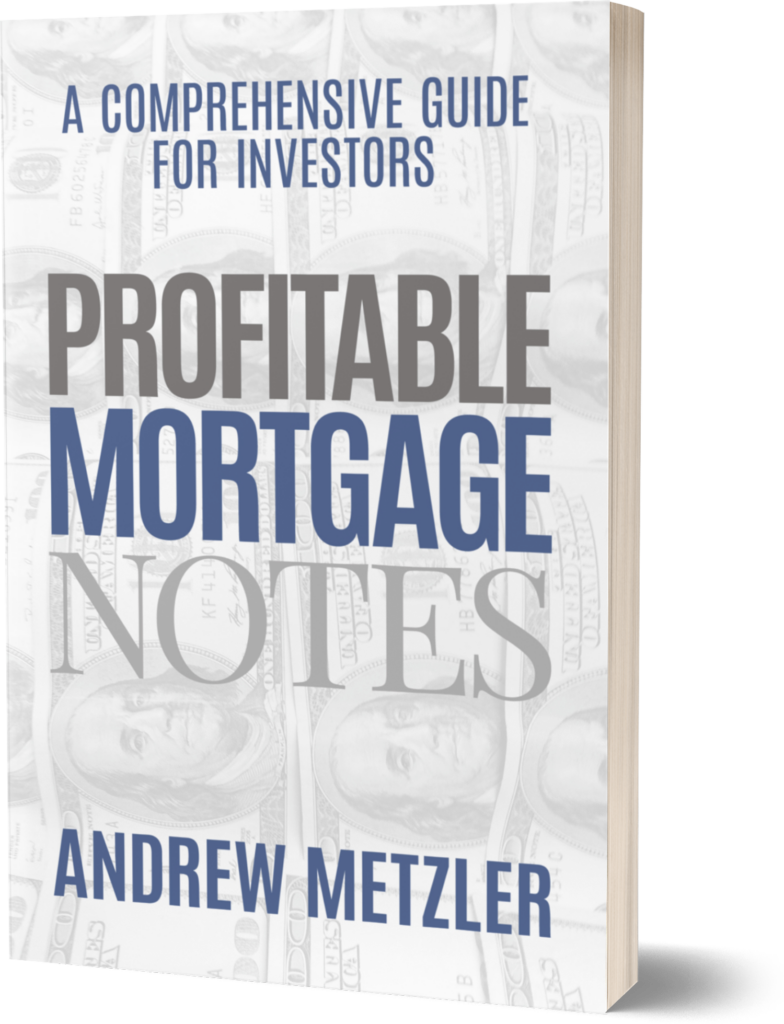
👉 Download a free copy of “Profitable Mortgage Notes”
👉 Or schedule a conversation to review current opportunities